
Madison County Municipal Court Warrants
Madison County routes municipal warrant questions to one court rather than a set of city portals. Huntsville's own Title 2 explains why. Its municipal court now carries the name District Court. The district judge stepped into the municipal judge's role, kept municipal jurisdiction, and the court may still use the county courthouse. The clerk's published duties cover city and county citations alike. For a Huntsville traffic ticket, ordinance violation, local misdemeanor, or missed appearance, that court is the verified first stop. Write to PO Box 549, Huntsville, AR 72740, call 479-738-2911, or fax 479-738-6846. One call covers most of it. The clerk checks the docket at Madison County District Court and explains procedural options. Legal advice is off the table, though. MCSO handles execution and custody matters, and a circuit felony case goes to the Fourth Judicial Circuit instead.
Huntsville and Madison County Municipal Warrants
In Huntsville, the phrase municipal court can mislead. Old local wording and the current state-court structure still overlap. The Huntsville code states that the municipal court shall be known as the District Court. That is more than a relabeling. It is why the city's own staff contacts point to the Madison County District Court judge and clerk rather than to a separate municipal warrant office. The Huntsville staff directory lists that same court contact path.
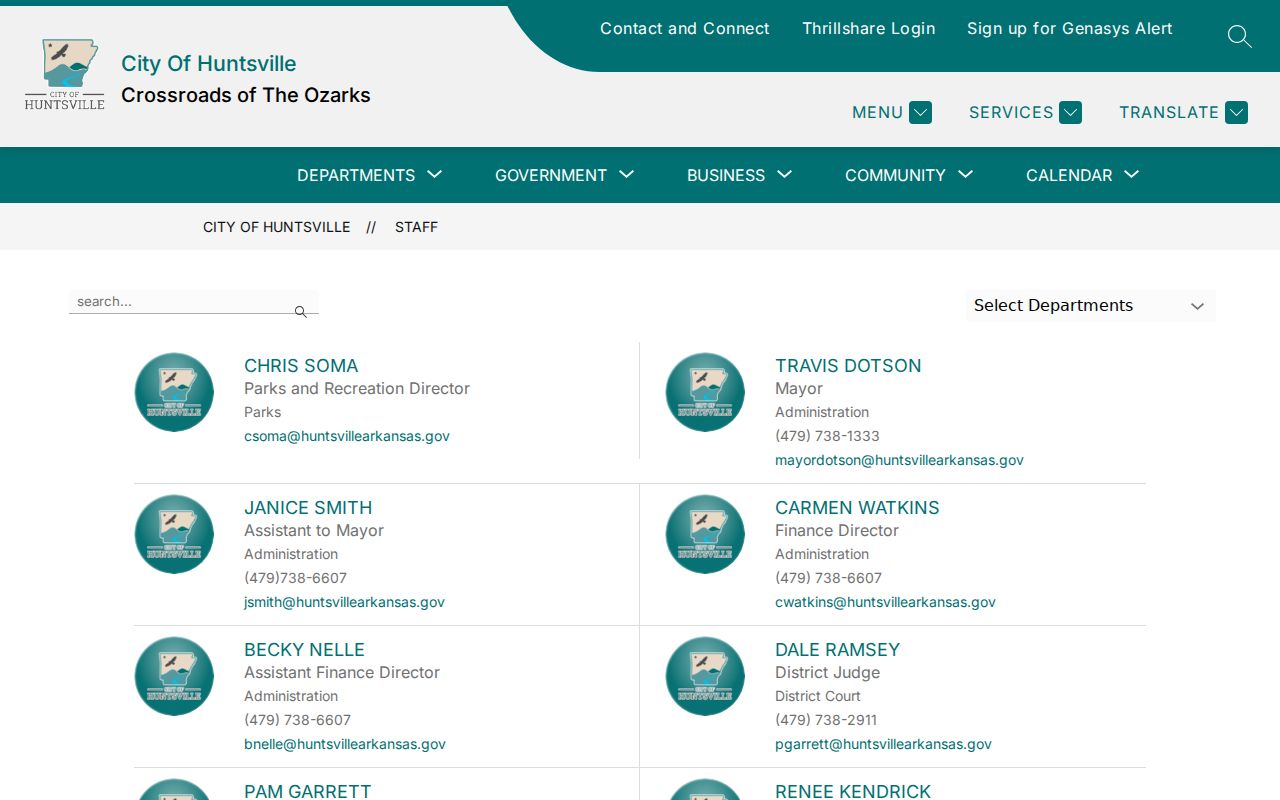
Read the court name printed on any Huntsville citation and start there. Ask the District Court clerk what the docket shows: an appearance date, a payment option, a failure to-appear entry, a bench warrant, or a recall. Huntsville publishes no public warrant-search portal of its own. The Madison County clerk is the check that counts.
Madison County Cities With Municipal Courts
Huntsville is the only Madison County town with a verified local court arrangement. St. Paul and Hindsville are incorporated towns too. Neither one posts an official police portal, municipal-court page, warrant form, or town records portal. Silence is not proof the towns lack local courts. It means your route follows the citation itself or the county contacts that answer.
| Place | Verified public court route | Warrant types and contact |
|---|---|---|
| Huntsville | Former municipal court is Madison County District Court | Traffic, ordinance, local misdemeanor, FTA; 479-738-2911 |
| St. Paul | No separate public town court verified | Follow citation; District Court fallback, 479-738-2911 |
| Hindsville | No separate public town court verified | Follow citation; District Court fallback, 479-738-2911 |
For execution, booking, or custody in Madison County, call MCSO dispatch or the jail at 479-738-2320. The sheriff's word is not the court's record. Use whatever court the paperwork names.
Madison County Municipal Warrant Clerk Route
The clerk's office is the working gateway for a Madison County citation, city or county. Published duties include handling citations, creating dockets, and fielding calls. Defendants call. So do police, attorneys, bondsmen, and the sheriff. The counter keeps weekday hours of 8:00 a.m. to 4:30 p.m., and callers should confirm before travel. That local detail beats a generic direction to visit the courthouse. The official district-clerk profile documents the court office.
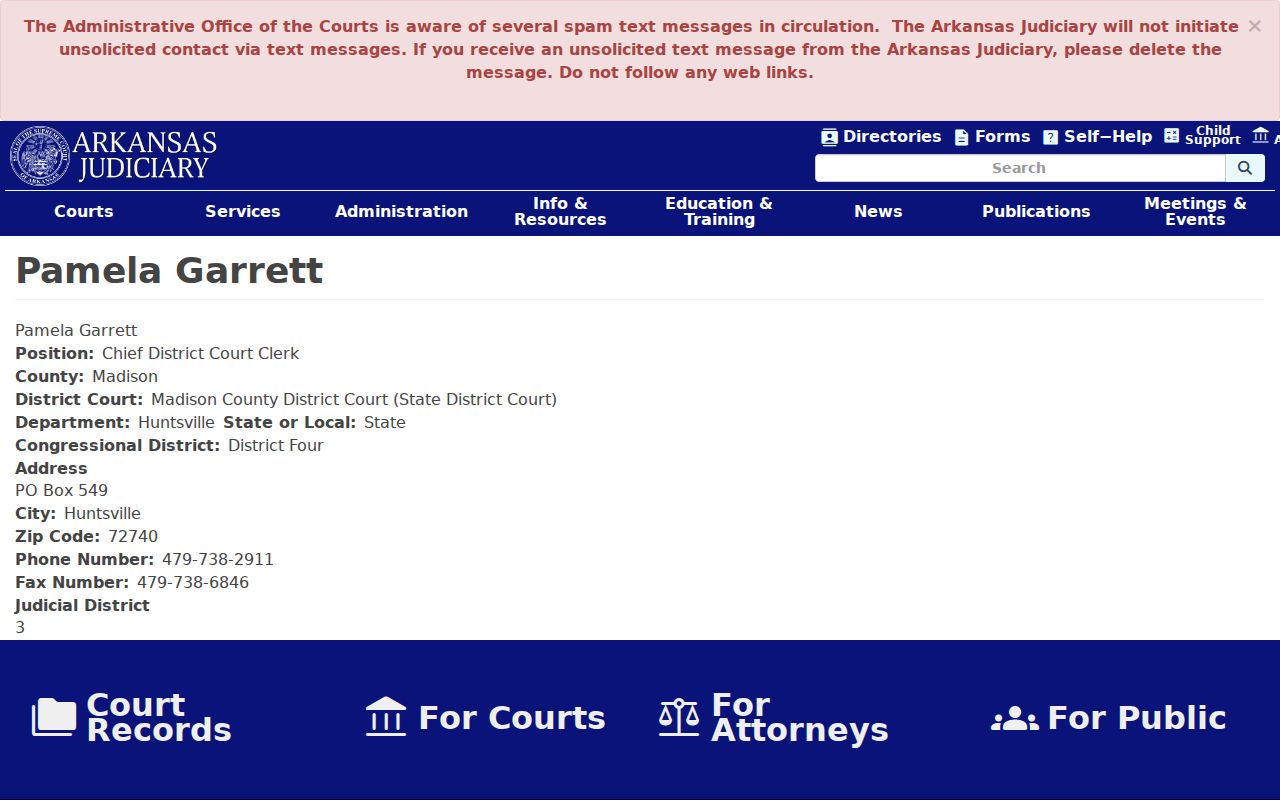
Have the citation or case number in hand. Ask which docket holds the case and whether a warrant was issued or recalled. The clerk can say if the Madison County court wants an appearance, payment, motion, bond hearing, or attorney filing. Share a birth date or government ID only by a secure method the clerk requests.
Note: The clerk supplies court procedure and records access, while legal strategy must come from a licensed attorney.
Checking a Municipal Court Warrant
Start with the citation, summons, notice, or case number. Search ARCourts next for case information. Treat a match as an index and a no-match as an incomplete lead, since neither settles warrant status. Then call Madison County District Court for the local process. For booking or custody, call MCSO, whose jail roster shows custody, not every open municipal warrant.
- Read the court and issuing agency on the document.
- Search by case or citation number through the official state portal when available.
- Call the District Court clerk and ask about the current docket and required next step.
- Contact MCSO only when execution, custody, or a sheriff-held record must be confirmed.
- Request court or agency records from the correct custodian if online access is incomplete.
Court-record access runs through Arkansas Supreme Court Administrative Order 19. It sets remote limits and covers sealed or confidential material. Agency records may fall under Arkansas FOIA instead. Madison County has no city warrant hotline, town app, or separate municipal lookup. No statewide public warrant index exists either. The state citation portal can settle an eligible ticket, but it is not a complete warrant search.
Who Issues Madison County Municipal Warrants
Under Arkansas law, a circuit judge, district judge, city judge, or magistrate may issue an arrest warrant once the required grounds are shown. The judge is the issuer. A prosecutor or law-enforcement officer may supply sworn material. That role never turns the officer into the issuing court. In Huntsville, the District Court supplies that judicial route. The official district-judge profile confirms the Madison County court office context.
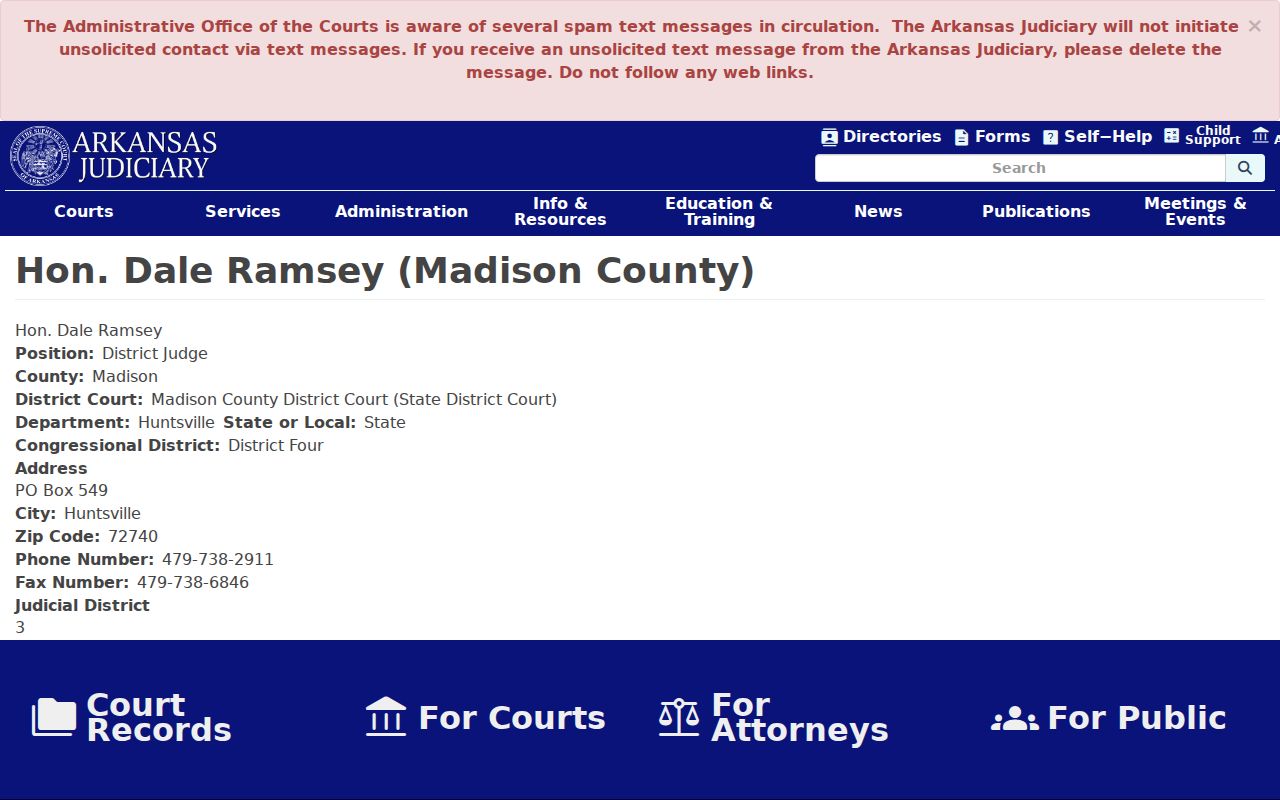
Warrants here start with the courts, not the county's top elected official. The Madison County Judge is the county government's chief executive, a different job from the state District Court judge who actually handles the docket. The County Clerk is no better a starting point, since that office does not hold a city criminal or traffic file. Ask the wrong desk and you may get a no-record reply that only means the paper sits elsewhere. The flow is simple once you see it. A citation enters the District Court docket, the court orders law enforcement to serve the warrant, and any custody record lands with MCSO. Recall and the next required date stay in the issuing court's hands.
Inside a Municipal Court Warrant
A Madison County municipal warrant record rarely lives in one place. The court docket, the signed warrant, the return, and any sheriff execution record may each hold a piece. The public docket can list a filing without showing the paper itself. A roster charge or bond amount can hint at what happened, but only the issuing record settles the warrant's status.
| Case or citation number | Connects the municipal matter to its District Court docket. |
|---|---|
| City or issuing agency | Shows where the citation began, not necessarily a separate city court. |
| Charge or ordinance | Describes an allegation or violation, not a conviction. |
| Issuing court and date | Identifies the court with control over status. |
| FTA or warrant event | May reflect a missed duty; confirm the exact docket meaning. |
| Bond, recall, or return | May be limited or absent online and needs clerk confirmation. |
Madison County publishes no warrant-number format or status-code guide. So treat nothing as a sample. Terms like served, recalled, quashed, reset, and hold mean whatever the current court or agency record says they mean.
Huntsville Police and Madison County Municipal Warrants
Huntsville Police and Madison County District Court split the work. Police handle incident reports and immediate law-enforcement matters, while the court owns the citation docket and warrant status. The department lists 200 East Main Street, phone 479-738-2610. Public hours run 7:30 a.m. to 3:30 p.m. Confirm before you go. The Huntsville Police page covers contact information and public-service routes, not a warrant database:
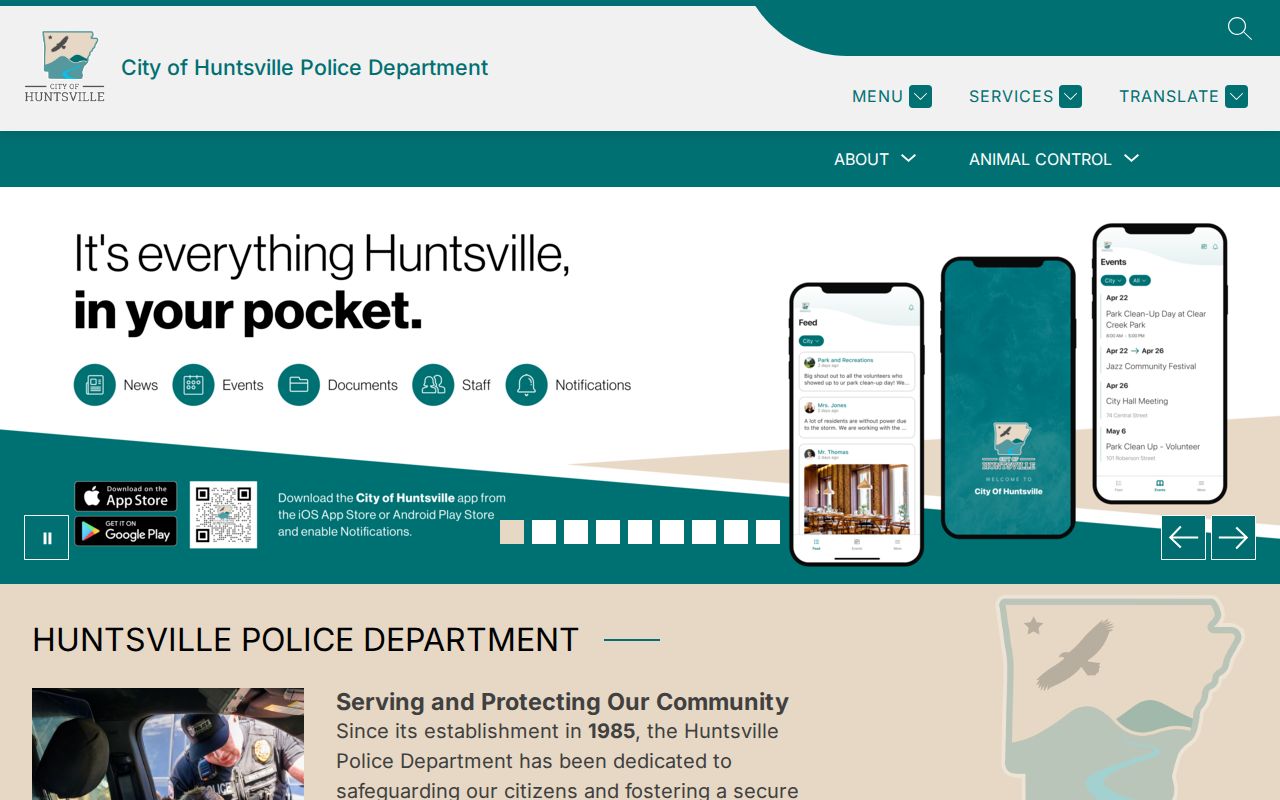
Huntsville has no separate warrant portal. A police report link or city app is not one either. Ask police for records they created. Ask the court for judicial status. Ask MCSO about county execution or custody, and a no-record reply from the wrong agency stops looking like proof that no Madison County warrant exists.
How to Resolve a Municipal Court Warrant
Start with the issuing court. Not the jail, and not a payment portal. Call the Madison County District Court clerk with your citation or case number handy. The court may want a new appearance, a motion to recall or quash, payment, a bond hearing, or an attorney filing, so ask which step applies. No single Madison County form, flat warrant fee, guaranteed same-day process, or amnesty program applies across the board. One caution matters more than the rest. The Arkansas online citation portal treats payment as a guilty or no-contest plea and a waiver of appearance and trial. Some violations still require an appearance no matter what. Read the terms, then ask the clerk or a lawyer whether online payment is available and proper in your case. Keep the receipt, but remember it proves payment, not recall of the warrant.
Caution: Obtain an updated docket, court order, or other official proof that the warrant changed status; roster removal and payment alone are not enough.
A hold from another department is outside the District Court's reach. Contact the authority MCSO names, and get the next court date or release condition in writing.
Small-Town Madison County Warrant Claims
A warrant claim tied to St. Paul or Hindsville deserves the same care. Neither town posts a police, warrant, or municipal-court portal. Read the court and agency named on the citation itself. If that is unclear, ask Madison County District Court which court owns the docket. Ask MCSO whether it holds an execution or booking record for the town.
- Municipal warrant
- Court process tied to city ordinance, traffic, or other local jurisdiction.
- Bench warrant
- Process issued by a judge after a missed court duty or failure to comply.
- FTA
- Failure to appear, which can describe an event, warrant basis, or separate allegation.
- Recall or quash
- Court action that changes or ends the process.
- Hold
- Restraint that may belong to another agency or court.
Incorporation alone does not give a town its own court. A records request to an agency should name the town, the issuing agency, the date range, and the record type. Court requests follow Administrative Order 19. For a traffic citation, the Madison County traffic warrant search covers state payment and FTA cautions. The Madison County most wanted reference explains county list boundaries.
Important: For an immediate arrest concern, contact a licensed attorney and the issuing court instead of relying on a town web search or unplanned jail visit.